
-(1).png)
.png)


retro technology
Jun. 5th, 2026 06:00 pm![[personal profile]](https://www.dreamwidth.org/img/silk/identity/user.png) cupcake_goth
cupcake_gothI'm seriously thinking of looking for a CD portable stereo. Yes, a boombox. I want to listen to some of the CDs I own, and I don't want to have to fight with iTunes/Apple Music to put music on my iPod. There are enough weird, incomprehensible steps to get new music I own onto my iPod, to the point that I'm going to need to set aside a day to see what I can manage.
So! Yeah, I'll add a boombox to my mental list of items I always look for at thrift stores.
---
Retro fashion technology: I've been getting into clip-on earrings. Mostly because I want to wear BIG earrings, and some experimenting has led me to the fact that BIG earrings are more comfortable as clips than as pierced.
Did you know that interesting clip-on earrings aren't easily found at thrift stores anymore? Just add that to the pile of reasons why thrift flippers/resellers vaguely annoy me. That, and Goodwill keeping their good merchandise for their auction sites. Grrrr.
So! Yeah, I'll add a boombox to my mental list of items I always look for at thrift stores.
---
Retro fashion technology: I've been getting into clip-on earrings. Mostly because I want to wear BIG earrings, and some experimenting has led me to the fact that BIG earrings are more comfortable as clips than as pierced.
Did you know that interesting clip-on earrings aren't easily found at thrift stores anymore? Just add that to the pile of reasons why thrift flippers/resellers vaguely annoy me. That, and Goodwill keeping their good merchandise for their auction sites. Grrrr.
FleaBane of Bloom
Jun. 5th, 2026 08:41 pmismoI went to the farmers market this morning, hoping there might be strawberries. Alas, there were none. It's still too early, I guess. It started out as a nice day, but clouded over, and as I drove toward the market, the tall buildings downtown, ahead of me, disappeared in a veil of rain that soon swept over my car. I got wet hustling under the market roof with my bag of bags. I got some hot pasties, and some fresh hummus and babaghanoush from the Phoenicians, as they call themselves. I got lettuce, bok choy, and radishes from the nature preserve farm. And then I hustled back home to text Strawberry Star. Intoxicated by her first day of retirement, she wanted to come over and have coffee. I shared some of my plunder with her, while the Sparrowhawk carried a pasty to his lair and consumed it. It kept raining and then was very damp, so I couldn't conveniently work in my yard anyway. Dang it.
After that point, I was kind of crashed. We amused ourselves watching the second half of "Where Eagles Dare," with Richard Burton and a very young Clint Eastwood. Holy cow, that was a lot of dynamite. A very judicious deployment of it, I must say. It's a well-crafter thriller because all the plot twists actually matter, and are not just there for shock value.
After that point, I was kind of crashed. We amused ourselves watching the second half of "Where Eagles Dare," with Richard Burton and a very young Clint Eastwood. Holy cow, that was a lot of dynamite. A very judicious deployment of it, I must say. It's a well-crafter thriller because all the plot twists actually matter, and are not just there for shock value.
The Sunnydale Herald Newsletter, Friday, June 5th
Jun. 6th, 2026 02:54 amdouble_dutchess posting in ![[community profile]](https://www.dreamwidth.org/img/silk/identity/community.png) su_herald
su_herald
BUFFY: I can't lose you.
GILES: (softly) Thank you.
source
[Anthony Head Tributes]
GILES: (softly) Thank you.
~~Checkpoint~~
Very sad news today. Anthony Stewart Head, who played Giles on Buffy, has passed away. He will be very much missed.source
[Anthony Head Tributes]

- Anthony Stewart Head by il_mio_capitano in summer_of_giles
- In Memoriam: Some Fic reposts for Anthony Head ~ #1; Fics for 2019 # 003 ~ Footprints by kerk_hiraeth
- In Memoriam: Some Fic reposts for Anthony Head ~ #2; Fics for 2018 # 004 ~ Ophelia; She is Not by kerk_hiraeth



- ASH was really a father for an entire generation by domoarigateaux
- The thing about Giles is that you get these glimpses of who he was as a person before he became a staid and tweedy watcher by antikate
- Rip Anthony Stewart Head. Here’s an amazing story about him that I read years ago and never forgot by harleycao
- Gileswench by moragmacpherson
- Gifset: Anthony Head (1954-2026) as Rupert Giles in Buffy the Vampire Slayer - 4x18 by inadvertently-biblical
- Vid rec: the watcher by KatrinDepp recced by bisexual-candyporn



- Anthony Head: Buffy and Ted Lasso actor dies at 72 by PukeUpMyRing
- Anthony Head has died by Only-Weird-4519
- I'm not okay by Important-Brain-9781
- Why did his death hit us all so hard? by eldy33
- Can this year please stop now by zeppoverlord
- Drop your favorite Giles quotes to remember the wonderful ASH by effulgent_summers
- No, we lost another actor!! 😭💔 What was your favorite Buffy and Giles moment? by gloomydreamer666
- Giles Singing Freebird - Buffy The Vampire Slayer season 4 - The Yoko Factor by Rpotamus
- My Curated Ode to Giles Rewatch by Extreme_Fall_4651
- Tonight I will be watching A New Man (4x12) at 6pm pst, 9pm est in honor of Anthony Head. This will be the discussion post for any that want to join. by baumyak
- Cross-stitch: Kiss the Librarian mug by BinaryShaymin
- I feel so bad for SMG by LetItSnow36
- SMG’s tribute to Anthony Head by JB92103
- There’s a hole in the world [JM tribute to Anthony Head] by ceecee1909
- David Boreanaz posted by eldy33
- From David's insta💔🙏 by TheBronsXX
- Emma Caufield pays tribute to Anthony by ceecee1909
- Eliza posted about anthony head passing away by socalyanki
- Charisma Carpenter’s tribute to Anthony Head by cosmicangels03
- Julie posted by Branchomania
- Please, can we give the other actors some grace at this time? Let them speak on their own time by AndrewHeard

- Article: Anthony Head: Buffy and Ted Lasso actor dies at 72 by bbc.com
- Article: Anthony Head, Star of Buffy The Vampire Slayer, Dies at 72 by ComicBook.com
- Anthony Head's 'Buffy The Vampire Slayer' Co-Stars Pay Tribute To Late Actor by deadline.com
- Article: 'Buffy the Vampire Slayer' stars remember Anthony Head by Entertainment Weekly
- "Anthony Head was an Ambassador for Battersea Dogs and Cats home for more than two decades. Thanks for everything Tony x" by Larry the Cat on X
- the courtesy of ripping out my throat by N1_Adora_Fan (Faith/Buffy, E)
- Barkin' at a Knot by Laqt15 (Xander & Jesse, G)
- Domestic by Muzzledjaw (Buffy/Spike, G)
- The Slayer by rhaenizziettie (Buffy, Legacies crossover, not rated)
- Fairytale Dreams by Joan963z (Buffy/Spike, PG)
- The Night We Met, Chapter 28 by TheSadPoet (Spike/OC, Buffy/Angel, M)
- Heroes, villains and Slayers, Chapter 38 by Stand_with_Ward_and_Queen (Ensemble, multiple crossovers, T)
- You Make Slaying Fun, Chapter 41 by cosplayermadness (Buffy/Spike, E)
- serves you right, Chapter 15 by socratesgirl (Buffy/Spike, M)
- Downvoted, Chapter 19 by Mishafer (Warren/Andrew, E)
- Bound by the calling | Fuffy, Chapter 31 by vampireslayerr (mongoosekiramman) (Buffy/Faith, E)
- Stake Me Baby One More Time, Chapter 15 by Moonlit_Illusion (Buffy/Faith, M)
- I’m A Slayer (And That’s Okay!), Chapter 21 by RKWesley (OC Slayers and Watchers, T)
- The Shape of Staying, Chapter 26 by andhetakesandhetakes (Buffy/Giles, E)
- Grow Up and Blow Away, Chapter 3 by supercali_expiali (Xander/Spike, M)
- What Remains of Hope, Chapter 17 by Angelinasway (Buffy/Obi-Wan Kenobi, M)
- Rounding the Bases: Chapter 13 by VladimirHarkonnen (TheLightdancer) (Willow, Ensemble, E)
- It Was Always You and Me, Chapter 5 by AaajMachine (Giles, Willow, Bridgerton crossover, T)

- Mile Markers and Blood Moons, Chapter 67 by JamesMFan (Buffy/Spike, R)
- serves you right, Chapter 15 by Nadia James (Buffy/Spike, NC-17)
- Lies of Gray and Gold, Chapter 4 by Sigyn (Buffy/Spike, PG-13)
- Undisclosed Desires, Chapter 11 (complete!) by Misti (Buffy/Spike, NC-17)

- Aegis, Chapter 35 by dogbertcarroll (Xander, DC comics crossover, FR15)
- Wrong, Chapter 12 by Kazfox (Buffy/Spike, R)
- Artwork: b day card my partner made me :3 by Wooden_Salamander235 (Buffy, worksafe)
- Artwork: now now... none of that! by rabbitmotifs (Buffy/Spike, worksafe)
- Artwork: Ethan, Giles, Buffy Doctor Who crossover by mmhhch (worksafe)
- Crochet: Willow and vampire!Willow by myboyknows (worksafe)
- Gifset: Giles and Anya in Doppelgangland by thirdtwin3
- Gifset: Buffy and Rona in 7.11 "Showtime" by daisychase
- Fanvid: Buffy/Angel, Ariana Grande by ceciliastark
- Playlist: A very much Buffy inspired playlist by deadgreenjupiter
- Fanvid: Buffy Summers | The Prophecy by butivegotsharpblades
- Fanvid: Buffy [Make We Wanna DIE] by Angelus_Clips (English)
- Fanvid: Buffy & Faith | Die For Me by thequeentaylor
- Fanvid: Buffy Summers -Angels/Buffy The Vampire Slayer by David Calle2026
- Fanvid: Buffy and Spike - Die With A Smile by juliaroxs241
- Fanvid: Tribute to Spike and Buffy by Billy Idol by DaveYaMind
- Fanvid: Buffy & Spike - Shame on You, Shame on Me by deviil-dolls
- Vidlet: Buffy Summers - Insomniac memo boy by ALEXEDIT
- Cosplay: Spike from Buffy the Vampire Slayer Outfit?!? by Parker York Smith
- Dead Man’s Party details by coraniaid
- Opinions on BtVS Season 4 by Fallintomidnight
- More thoughts on BtVS Season 4 by Fallintomidnight
- About 5x01-5x04 by Fallintomidnight
- Video: Underrated Gems: Buffy the Vampire Slayer [movie] by Vik Flix
- Video: A manic recap of Buffy the Vampire Slayer | S1 - EP 2 | The Harvest by Necromelia
- Video: CinéBelch Ep6 - Buffy The Vampire Slayer (1992) by Reg (& Others)
- Video: The Rock on Wild Show Episode 70: Buffy The Vampire Slayer Episode Tier List by Just Mike
- Podcast video: My thoughts on Buffy Season 4x01 "The Freshman" and Angel 1x01 "The Pilot" by Kaytra
- Podcast video: My thoughts on Buffy Season 4x02 "Living Conditions" and Angel 1x02 "Lonely Hearts" by Kaytra
- Podcast video: My thoughts on Buffy Season 4x03 “The Harsh Light of Day” and Angel 1x03 “In The Dark” by Kaytra
- Podcast video: My thoughts on Buffy Season 4x04 “Fear Itself” and Angel 1x04 “I Fall To Pieces” by Kaytra
- Podcast video: Buffy the Vampire Slayer, Season Seven, Episode Seventeen: Lies My Parents Told Me by Slayed! The Buffyverse Revisited Podcast
- Podcast video: Buffy the Vampire Slayer: Season 6 Episode 17 - Normal Again by Sh*t 90s Shows Taught Me
- Podcast video: S7E07: Conversations With Dead People by One Girl in All the World
- Podcast video: S7E08: Sleeper by One Girl in All the World
- Podcast: Once More With Feeling - 7 x 4 Help by Nerd Subculture Podcast
- Podcast: This Buffy Episode Makes Us SO Angry - S2E11 [Ted] by Buffy Babes Podcast
- Podcast: Five By Five (Buffy and the Art of Story Podcast – Angel) by Lisa M. Lilly
- Podcast: WILD AT HEART (Buffy 4X6) by REVAMPED
- Podcast: Buffy The Vampire Slayer (1992): "Running From The Slayerness" by Attack of the Final Girls
- Podcast: EPISODE 2: WELCOME TO HELLMOUTH & THE HARVEST by Boink Studios
- Podcast: EPISODE 3: WITCH by Boink Studios
- I started pondering after watching Dead Man’s Party: what is the deal with Snyder’s relation to the Mayor? by badwolfwho1
- I wish the show had gone more into the fact buffy still loved angel when he was evil by camellcat
- Dracula by charmedslayer and Fallintomidnight
- willow and oz’s interactions in new moon rising by fancyhalloran
- many ppl do not take the time to understand xander AND i honestly don’t think something blue is that good by lesbianmarrow
- Buffy and Spike mirror each other in so many ways by maurisescapism
- something blue by socratesgirl
- Buffy/Star Trek friendships that I think should be a thing by swarmofbees13
- How would you assess/analyze Buffy Summers? answered by ceciliastark
- How would you assess/analyze Buffy Summers? answered by sulietsexual
- Back when Joyce didn't know Buffy was the slayer and just kept coming home to broken windows by anonymous and ceciliastark
- it really bothers me that we know EXACTLY where in England Willow goes to magic rehab with Giles, but any reference to Africa is just “Africa” by evilvampire
- I almost never see anyone talk about Dawn Summers and Hank Summers specifically AND I actually kind of like Kennedy by fictiongods
- character everyone gets wrong: Willow AND I don’t necessarily think that the attempted rape was ooc for spike by n1-adora-fan
- Complaints about the scoobies being bad friends make me roll my eyes by n1-adora-fan
- The central tragedy of Buffy the Vampire Slayer by originalleftist
- big shoutout to whoever it was that made the Buffy The Vampire Slayer season two era Dru/Spike-themed Choose Your Own Adventure website by sebastianfowler
- Doing some idle research into the history of the surname "Keeble" [Drusilla's last name in one of the comics] by she-posts-nerdy-stuff
- Should Dawn have been killed off in the Gift ? continued by multiple posters
- Episode Discussion - So about that whole…”Wesley X Cordy” thing… continued by multiple posters
- Talk about Season 7 continued by Mott1
- Tara and spike continued by multiple posters
- It's an eight-hour flight. Where are you sitting? by guireporn
- The Darla storyline in Angel by SmiLe-105
- Longtime [Angel] fan having a hard time with Charisma and Starting Season 5 by di4me666
- Nitpicking Buffy Opening Credits Ending Shots (S6 &7) by WhatEvenIsATangelo
- Is this the oldest looking teenager in the series? by RealisticAd4054
- When does Buffy sleep? by Luxe_1o1
- Crossover Top by RoseWhispers06
- I hate it sm when people call dawn annoying by themaddestwomaan
- Spike season 6 finale – writing choices by Mean_Special6522
- How did people who listened to Slayers feel about it? by TheFrostWolf7
- Singalongs? by therealwendy
- Video: Мессианский психоз Баффи by Сумеречная зона
- Video: The Bittersweet Storytelling of Buffy the Vampire Slayer: A Masterclass in Creating Emotional Impact by Witless Prattle Essays
- Podcast: Is masculinity another monster in Buffy the Vampire Slayer? by A Girl, A Guy and A Buffy Podcast
- Podcast: Small Bites: The slayer activation spell by A Girl, A Guy and A Buffy Podcast
The Sunnydale Herald is looking for at least one new editor. Contributing to the Herald is a great way to get your Buffy on! Find out more here.
[Drabbles & Short Fiction]
[Chaptered Fiction]
[Images, Audio & Video]
[Reviews & Recaps]
[Search & Recs]
[Community Announcements]
[Fandom Discussions]
![[syndicated profile]](https://www.dreamwidth.org/img/silk/identity/feed.png) atlinguistic_feed
atlinguistic_feedBonus Episode 112: The Lingthusionist - Interview with Helen Zaltzman | Lingthusiasm
Bonus Episode 112: The Lingthusionist - Interview with Helen Zaltzman
The Allusionist is a podcast that tells stories about language and the people who use it, which actually started only a year or so before Lingthusiasm but has always felt a bit like our older cousin.
In this long-awaited crossover bonus episode, your host Lauren Gawne gets enthusiastic about linguistics podcasting with Helen Zaltzman, host of The Allusionist podcast. We talk about being nearly teenaged in the world of language podcasting (Lingthusiasm turns 10 later this year, and The Allusionist turned 10 last year!) and alternative careers that we had on the way to becoming podcasters (did you know Helen once worked for a reality TV show?). We also talk about breaking the kiki/bouba test, the importance of publishing “failed” experiments, the Bender Rule and the Holliday Rule (both previous Lingthusiasm guests!), and answer a listener question, which we’ll now pose to you in the comments. Heather asks, “If you had the power to change one thing about the English language, exclusively for low-stakes reasons, such as pettiness, vibes, or aesthetics, what would you change?”
Listen to this episode about linguistics podcasting with Helen Zaltzman, host of The Allusionist podcast, for free on our Patreon! Get access to many more bonus episodes, plus our Discord server where you can chat to other language nerds, by supporting Lingthusiasm on Patreon.MARVEL EAT YOUR FUCKING HEART OUT - HERE’S THE CROSSOVER I WANT
Just wanna highlight that this one’s available for free to anyone who follows us on Patreon, just hit that “join for free” button, as a way to try and make it more accessible to people who are fans of one of us and don’t know the other one yet!
(We’re experimenting with more free posts on Patreon in general lately including an exciting behind the scenes announcement that went up yesterday so it might be a good time to take a peek.)
Daily Check In.
Jun. 5th, 2026 06:51 pmadafrog posting in fandom_checkinThis is your check-in post for today. The poll will be open from midnight Universal or Zulu Time (8pm Eastern Time) on Friday to midnight on Saturday (8pm Eastern Time).
Please, talk about how things are going for you in the comments, ask for advice or help if you need it, or just discuss whatever you feel like.
Poll #34691 Daily poll
Open to: Access List, detailed results viewable to: Access List, participants: 7
How are you doing?
I am okay
5 (71.4%)
I am not okay, but don't need help right now
2 (28.6%)
I could use some help.
0 (0.0%)
How many other humans are you living with?
I am living single
1 (14.3%)
One other person
2 (28.6%)
More than one other person
4 (57.1%)
Please, talk about how things are going for you in the comments, ask for advice or help if you need it, or just discuss whatever you feel like.
(no subject)
Jun. 5th, 2026 07:46 pmmajuI'm feeling really tired this week, and I can't work out why. I don't think it could still be the effects of my surge of walking and running last weekend, surely? I've been sleeping well and waking up feeling refreshed, but then halfway through the day I start to get a headache, and yesterday I even dozed off briefly while sitting on the couch. (One of those fleeting naps lasting only a few seconds that are surprisingly refreshing.)
=========
Well, you never know what's going to happen next around here. After dinner I was sitting out the back in the shade of the oak trees trying to avoid the sun shining through the branches, when the girls, all ready to go for a swim at one of the local pools, came out to ask if I would consider going with them because they needed someone with local ID (showing an address in this town) to get into the pool, and my daughter, while she has ID (a UK passport and driver's licence) does not have local ID as her green card doesn't have her address on it. I wasn't sure if my ID would work since I don't have a local pool pass although I am now associated with my daughter's household since getting the pass for the local parks, but I agreed to go along. (All the girls were begging and pleading with me because they've been desperate for their first swim of the season, and how could I disappoint them?)
However, when we got to the pool it was closed, and a quick check of the website showed it won't be open until 22nd June, although the other local pool (which we could have gone to instead) has been open since Memorial Day. (And this one normally opens on Memorial Day too.) As a compromise, my daughter agreed to go to an icecream shop which sells dairy- and gluten-free ice creams and toppings - Dave's Gourmet Paletas, or Mexican ice creams on a stick. This turned out to be about half an hour's drive from the pool, which was already about 15 minutes drive from home. I was a little underwhelmed by the ice cream; it was not the lovely creamy ice cream I like, but the girls like it, and the toppings were good.
We left there around 6:20 pm because Violet had to be at Scout Girls (at the middle school) by 7, and my daughter needed to stop at Michael's on the way. Violet was very worried we were going to be late, but we arrived at the middle school a couple of minutes before 7 and in fact, she was the first person there.
A funny aside: On the way from the pool to the ice cream place along a lot of back roads, we passed along a road which I suddenly recognised because it was a road S and I had walked along several times in the early mornings, back in 2022 when we were staying in a hotel while spending time with my daughter who lives here (when she was still living in a small apartment) and my youngest daughter, husband, and two little boys who were visiting from Australia. I exclaimed that I recognised the area, and my daughter was very surprised that I still remember it after almost four years. I reminded her that S and I had walked along it several times because it was really the only pleasant walking route near our hotel. I know I have a much better sense of direction and memory for routes than she does, but I was still surprised that she was surprised by my memory.
=========
Well, you never know what's going to happen next around here. After dinner I was sitting out the back in the shade of the oak trees trying to avoid the sun shining through the branches, when the girls, all ready to go for a swim at one of the local pools, came out to ask if I would consider going with them because they needed someone with local ID (showing an address in this town) to get into the pool, and my daughter, while she has ID (a UK passport and driver's licence) does not have local ID as her green card doesn't have her address on it. I wasn't sure if my ID would work since I don't have a local pool pass although I am now associated with my daughter's household since getting the pass for the local parks, but I agreed to go along. (All the girls were begging and pleading with me because they've been desperate for their first swim of the season, and how could I disappoint them?)
However, when we got to the pool it was closed, and a quick check of the website showed it won't be open until 22nd June, although the other local pool (which we could have gone to instead) has been open since Memorial Day. (And this one normally opens on Memorial Day too.) As a compromise, my daughter agreed to go to an icecream shop which sells dairy- and gluten-free ice creams and toppings - Dave's Gourmet Paletas, or Mexican ice creams on a stick. This turned out to be about half an hour's drive from the pool, which was already about 15 minutes drive from home. I was a little underwhelmed by the ice cream; it was not the lovely creamy ice cream I like, but the girls like it, and the toppings were good.
We left there around 6:20 pm because Violet had to be at Scout Girls (at the middle school) by 7, and my daughter needed to stop at Michael's on the way. Violet was very worried we were going to be late, but we arrived at the middle school a couple of minutes before 7 and in fact, she was the first person there.
A funny aside: On the way from the pool to the ice cream place along a lot of back roads, we passed along a road which I suddenly recognised because it was a road S and I had walked along several times in the early mornings, back in 2022 when we were staying in a hotel while spending time with my daughter who lives here (when she was still living in a small apartment) and my youngest daughter, husband, and two little boys who were visiting from Australia. I exclaimed that I recognised the area, and my daughter was very surprised that I still remember it after almost four years. I reminded her that S and I had walked along it several times because it was really the only pleasant walking route near our hotel. I know I have a much better sense of direction and memory for routes than she does, but I was still surprised that she was surprised by my memory.
Daily Check-In: Day 5
Jun. 5th, 2026 06:57 pmmiscellaneous_section posting in writethisfanficHappy Friday everybody!
Did you get some writing in?
Did you get some writing in?
- Yes
- No
- I've thought about it.
kerk_hiraethThis second of three In Memoriam Giles fics to commemorate Anthony Head I've gone back to 2018 for the second in my Nancy!verse fics, since it features an extended scene from Giles (explanation in the A/N below.
kerk hiraeth
Fics for 2018 # 004 ~ Ophelia; She is Not
kerk-hiraeth.dreamwidth.org/4751.html
TITLE: Ophelia; She is Not
AUTHOR: kerk_hiraeth
FANDOM: Buffy the Vampire Slayer (au-from The Harvest onward)
CHARACTER(S): Nancy (from The Wish); Buffy Summers; Cordelia Chase; Rupert Giles;
LENGTH: 1,800;
A/N: This 'verse comes out of the discussions in the comments for kerk-hiraeth.dreamwidth.org/3131.html
the second one since my 'comeback' to writing fanfic, with yourlibrarian
I was really set to thinking as to the history of the show, and how it might differ if, as in this 'verse, it was Willow who was vamped and killed in the pilot.
Those thoughts led me to Nancy. Nancy who? Well I have given her a surname; and have sketched out enough of a backstory in my head to carry more stories forward but this
buffy.fandom.com/wiki/Nancy_(Wishverse) says all you need to know vis-a-vis the canon of the TV show, though in my head she's a college student, with an interest in theater ; she's also gay, which leads me to the girlfriend.
Jan, or Janan, to give her her full given name has appeared in one of my stories before. She was Tara's first girlfriend and, though it wasn't ever stated in this drabble kerk-hiraeth.dreamwidth.org/7416.html ; one of a set of three for open-on-sunday, was much older than Tara at the time; as Nancy would have been when they were together before this story is set.
I hope to see Nancy and Jan again*, but it occurs to me now that, even when I was writing Nancy's moments in my mind; Jan was her girlfriend, and she was the same Jan as in the drabble.
The dodgy lighting over the theater parking was the same; one light had been fixed since last semester, that was it. The air was crisper; though not even close to the weather she'd grown up with, still strangers to California got a brisk shock when they experienced it. Traffic was lighter than most expected for a town this size; but the docks sounded lively; must be a couple of ships in.
Nancy felt strange about it tonight that's all; first rehearsal for a production since...
She grimaced; she'd gone and wasn't coming back. She sighed, reflecting that now she was starting her final year; strangeness walked hand in hand with Sunnydale every night.
She couldn't fault Jan for leaving after... After it happened. She had no warning of Sunnydale's rep before she arrived; Nancy remembered Jan being so shocked that she had come to UCSD even knowing about it she'd been rendered speechless for the rest of what had turned into their first night together.
Hadn't been planned as their first date, and Jan had made it clear enough over the months that learning about this town had not affected her decision to begin sleeping with her, but Nancy had always wondered.
Jan had nearly finished her Freshman Year when she'd been... it had happened. Nancy cursed Greyhound for it's timetabling, but she'd known; with increasing certainty that the moment her remaining projects were completed Jan would be heading somewhere safer.
It had started as a tiny humorous thing; this ritual, but it had quickly become part of their nights rehearsing at the local theater for the local drama group's productions. Jan had grasped onto it; Nancy now saw, as a way of controlling her fear.
Her last year here; Nancy had rather it had been 'The Winter's Tale', but this would do ~ if only this had not been Jan's favourite, and if Cordelia had not been the part that Jan would have been perfect for.
She wondered if she'd have got to play The Fool anyway; boyish as she looked at times, but she liked Cordelia anyway. She did ponder what it would be like to play Gloucester, or even maybe Lear.
But Cordelia would do.
So she settled her books and notes into the crook of her other arm; lifting her left to the sky to declaim.
“Hark! Hark! The lark at heaven's gate sings,
And Phoebus 'gins arise;
His steeds... “
And there it ended as she was unceremoniously shoved aside by a pair of giggling high school rich... divas. Ironically, she supposed, one of them appeared to be Cordelia. Nancy didn't recognise the asian girl with her, but the not so surruptitious glance backward told Nancy that the moment had been deliberate.
Actually it surprised her, because she knew that Chase had become part of the production team on the recommendation of one of the teachers; Nancy knew her and respected her, the woman had given up on a theatrical career of her own because of racism on Broadway; deciding on a career she loved better anyway.
She didn't have to work hard to figure why she'd been targeted; for once not because she was a lesbian.
She smirked; kinda refreshing that actually.
Sighing she began to turn to pick up her belongings when she was almost knocked onto her backside by another; this time clearly accidental, collision. As she collected her wits, Nancy thought she heard a mumbled apology and almost clashed heads with the, apparently, extremely nervous girl flapping about in front of her; Nancy having, by this time, knelt down to assist in the recovery of her own belongings.
Gripping a hard wooden object she suddenly recognised who it was.
“Buffy Summers,” she said calmly, but so appreciatively that the poor girl actually stopped wrecking Nancy's notes and looked directly at her; admittedly confused until Nancy pointed out where she knew Buffy from.
“Last semester? You rescued my girl... “
Choking off that sentence, Nancy smiled; with only the slightest of grimaces, as she inwardly berated herself for, once more, forgetting that Jan was gone; never to return to Sunnydale. She knew the letter waiting to be opened in her room told her where Jan was spending the rest of her college life.
In a different City; different State? Different country.
Anyone speculating on different continent, would not be crazy to lay money on.
She thought she almost detected a moment's relaxation; only to be distracted by the object she realised she was holding. It smelt of ash, and a little blood; wasn't sharpened of course, and appeared to be made of the same wood as the chairs the cast used between scenes.
Bemused, Nancy watched Buffy pick up; calmer and steadier now, her books and notes; gather them together neatly and hold them out to her. Nancy stood confused for a second, and then held the makeshift stake out to the Slayer.
Fuck, but she was even tinier up close!
From somewhere Nancy's personality kicked in and she smiled. “Fair exchange?”
It was Buffy's turn to be confused again; especially when Nancy held out her hand; her left hand, and it took her a couple of seconds to respond and take hold of it as they shook hands; Buffy remembering at the last moment to move the stake to her other hand.
“Nancy Walker, “ she said, feeling it unusally necessary to explain; unintentionally repeating herself as she did so, that Buffy had, “... saved my... “
She cursed, in arabic; which didn't help, as she kicked herself for... She was gone; Walker it's time you got used to it. She was never the u-hauling romantic, but Nancy knew she had almost begun to imagine a future with this one.
She was rescued from further maudlin reflections when Buffy's head dropped and she mumbled ~ damn she was so small, “I'm sorry.”
Nancy's chuckle made Buffy glance up again.
“For what? Saving her? She's still alive, and I can hardly fault her for leaving a town with the rep this one has; now can I?”
Nancy thought Buffy looked a bit nonplussed at that; suddenly it occurred that the poor girl wasn't used to people actually having conversation with her; talking to her.
As that thought formed; another more disturbing one beat it to her vocal chords.
The beads of sweat; the still heavy breaths and the biting of the lip.
“You're scared... was there a vampire on the crew?”
Buffy didn't have to answer, though she held up two fingers, “Scheisse!”
Suddenly Jan's frantic messages; that scared timbre to her voice when they spoke after Nancy called to let her know that the bus was finally getting into Sunnydale and to meet her at College, the way she'd had to be calmed down and didn't appear to be all there when they made love.
Her constant trips to the bathroom.
How could I have been so obtuse?
Aloud, she muttered, “I was too horny to see straight!” A titter from nearby brought her back to the present. She saw this tiny child, but was saved from sudden anger by that grin, and laughed herself as she realised that she had, indeed, said that last out loud.
Nancy looked at her and abruptly offered to buy her a coffee at the bus station if she'd escort her there. Buffy looked like she was about to refuse, then shrugged, muttering absent-mindedly that she would, and would miss working at the theater now her mission was over.
“Why leave? “ Adding, before the Slayer could point out what, she imagined anyway, was obvious, “You really are good with your hands.. you turned a piece of chair leg into a weapon with... what? Your fingernails? That blood is yours, yeah?”
Buffy seemed to relax a bit; telling Nancy about her friend Xander; who'd passed on tips, apparently from some alcoholic relative, so she wouldn't seem too out of place working on the sets.
“You still seem lonely, if I can say that. Do you only have... “ She needed to choose her words carefully; almost having forgotten how to talk to a girl she wasn't trying to seduce. “Boys in your life?”
Buffy tried not look too regretful, but it was clear she had no girlfriends. She seemed about to say there was one, but thought better of it; bit her lip and, eventually, admitted, “I could use a girlfriend.”
Nancy almost doubled over in silent mirth as Buffy almost seemed to turn the colour of the Sunnydale sports jerseys as she realised what she'd said.
Nancy held up her hand, “Small 'g' is fine; been a while, but I think I can recall how to talk to, “ she gestured the appropriate apostrophes; promising to kick herself later for using them, “ 'straight' girls,”
The kid actually laughed at that and gestured towards the parking exit on the bus station side of the building. Nancy mocked the swooping of a hat; inappropriately as Buffy was the 'hero', but what the heck.
It was actually kinda nice to play the romantic hero to a girl for once.
Maybe she would try for the male lead next time after all, she smiled to herself.
“He sounds like a good teacher, “ she was saying to Buffy as they turned onto the sidewalk, and waited patiently for the lights to allow them to cross.
Now, if you were following the two young women ~ at a discreet, and stealthy, distance ~ you might have been expected to miss the knowing smile on the younger ones face at that remark.
If that same smile, and the thought behind it hadn't also been on your mind.
You might also have missed the pain on the face of the watcher as they recalled the misery at the death of an even younger girl, because of your; not your charge's, mistake.
You might also have been wondering what to do about the two earnest, and dangerously heroic young people trying to assuage their own survivor's guilt by helping you and your charge; two tragically ill-equipped; angry, very young men to be, who felt far too much like yourself at that age for comfort.
You might further feel that you were in too deep to cut them loose; especially as they were showing signs; buried in their earnestness, but there nonetheless, of promise that could lead them to become much better adults than you felt.
You, further to all that, might be concerned at how to marry that with the need to actually do your job and keep your charge alive for as long as possible; even unto your future mandated betrayal.
Which you so wished you could see a way out of.
Then you might see in this new – possible – female influence a way of providing a release from your charge's overwhelmingly masculine social group which, in the dog eat dog atmosphere of an American High School, could leave all three of them dangerously isolated.
Carefully you retreat as you realise you've got too close behind them, but not before you hear the older woman offer her hacking ~ whatever that was ~ in return for your charge carrying on with the work on the sets; also promising doughnuts; pizza and some of those horrendously sugary confections Americans called mochas.
So you decide to stand, eventually, where you are, until you are sure they are safe inside the bus station. Feeling hungry yourself now, you might recall the younger boy offering you and the aforementioned Xander, pizza and a movie at his house, since his parents were going out to visit relatives and would not mind at all a teacher acting chaperone; since you couldn't be somethng they were too old for anyway.
Sadly you might also reflect on how grateful Xander looked at the prospect at this, possibly, meaning not having to go home at all.
As you turn away, your thoughts might avoid what their choice of filmic entertainment might be and turn to the easily digested pizza; as long as you could persuade them to stay away from those evil anchovies...
You might also decide her report could wait until morning.
Goddess watch over you,
Morning Song
Hark, hark, the lark at heaven’s gate sings,
And Phoebis gins arise,
His steeds to water at those springs
On chalic'd flow'rs that lies;
And winkling Mary-buds begin to ope
their golden eyes;
With every thing that pretty is, my lady sweet, arise:
Arise, arise!
(Act 2, Scene 3, William Shakespeare's Cymbeline)
~ from A Shakespeare Anthology, published by Collins (pocket-sized edition)
kerk hiraeth

Manga Check-in: "Detective Conan" v98 ch. 1043-1047 & v99 ch. 1048-1057
Jun. 5th, 2026 05:29 pmbluapapilio
Chapter 1043-1046: Alright it's a new shogi related case it looks like.
It's nice to see Ai smiling so freely.
Shuukichi of course makes an appearance. Ugh stupid suspected cheating plot with Yumi. 🙄 How has this couple made it this long.
Yumi's image of Shuukichi's family being carefree. Smiling Akai... 😂
Yuukichi: "I have a great idea, I'll go confront the killer on my own and not tell anyone where I am!" *minutes later* "Oh, they knocked me out tied me up, okay"
I realized towards the end that this case seemed way too familiar, I hope I haven't gotten past this and forgot to mark it on MAL...
I kinda feel like they made Conan slow so that his dad could have the spotlight. But then again it's happened in the past where Conan only realizes something down the line.
I've definitely already read this befooore. Well hopefully it won't be too much retreading...
Chapter 1047: Lol Conan is a bad liar, all he had to do was say the pill in his case was a pain killer or heartburn pill or something when Sera brought it up.
We get a glimpse of how Mary got changed. She wants Conan's pill.

Chapter 1048: More Mary backstory. That's sad, she knew her husband was dead the minute the impostor didn't know about their daughter. 😭 It was Vermont who poisoned her.
Chapter 1049: Whoa, was not expecting Vermont to KISS Mary to give her the pill. ...That is like her though.
Conan is really not very good at this hiding thing. Also I wish Sera would just open up to him so they can share info and work together already.
Chapter 1050: Why did Mary and Sera assume Conan's pill would permanently turn Mary back?? And if that was the only pill, it's cruel to steal it from a teenager.
Chapter 1051: Kazami gets kidnapped and Amuro heads off to save him. The kids are off on a trip to get new chickens for their class and end up on the same bus.
So is the teacher Wakasa the second in command of the Black Organization after all??
Chapter 1052: Wakasa had the shougi piece that Haneda Kouji was missing after he died... It was the last piece he moved after winning against his teacher. "Whoever has it must be the murderer!" his parents said. Amuro doesn't realize it was on Wakasa.
Chapter 1053-1054: For some reason this chapter feels reaally familiar, the scene where Wakasa gets the shougi piece back.
Chapter 1055-1057: Another Okino Youko case. I would totally watch that ghost detective movie. Wakita gets involved. It's so tempting to spoil myself to find out who Rum is especially because Wakita brought up a missing shogi piece. Yeesh dark domestive violence case.
Chapter 1058: Kaitou Kid story!! Lol Conan is lucky it was him spying on them and not the enemy... Ehh why did the volume have to end there.


June Manga TBR 4
Jun. 5th, 2026 04:53 pmbluapapilioUsed my manga TBR boardgame. I read 11/18, DNF'ing one and not reading 5, on my last board. I experienced a complete lack of interest in reading the stuff left on my list and now I just want to read smut for this one. 🤷 I'm frickin' tired, brain wants simple stuffs only now though of course it all depends on the roll of the dice what I get, I can only tailor it so much.
Avatar:

Conan
Skill: Beat the trap tile once
Roll #1:
A 1, prompt: romance element - "Onna" to shite Dakaretai… Seitenkan Shite, Hatsukoi o Mou Ichido..
Roll #2:
A 2, prompt: mystery adventure Detective Conan.
Roll #3:
A 3, prompt: supernatural mystery - Shugo Chara!.
Roll #4:
A 2 and the TBR tile. 73x42 is Shishunki no Ayamachi.
Roll #5:
A 4, prompt: fantasy creatures - Akuma no Himitsu.
Roll #6:
A 1 and the CR tile. 4x48 is Yugioh.
Roll #7:
A 4 and the trap tile, not using skill. Prompt: mutual unrequited love - Derail.
Roll #8:
Went back and rolled a 4, prompt: read a manhua- Time Traveled to Meet You.
Roll #9:
A 6 and right back on the trap tile again. Prompt: mystery horror - Sankaku Mado no Sotogawa wa Yoru
Roll #10:
Went back and rolled a 6 which is the CR tile. 4x28 is Taming the Tiger.
Roll #11:
A 3, prompt: angels - EniDewi.
Roll #12:
A 5 and the TBR tile. 10x7 is Bokutachi Hokentaiikuchuu.
Roll #13:
A 3, prompt: action comedy - One Punch-Man.
Roll #14:
A 6, prompt: published between '15-20 - Men of the Harem.
Roll #15:
A 1, prompt: only has 1 volume - Akumariage.
Roll #16:
Another 1 and Double Prompts. Sword/sorcery + oldest on list. At least it's not FeWL this time. Let's see...I believe it's Mahou Kishi Rayearth.
Roll #17:
A 2, prompt is supernatural drama - Blue Exorcist.
Roll #18:
A 5 and the end, reward is - Ikenai Otoko.
~Manga TBR List~
[Romance/Smut] "Onna" to shite Dakaretai… Seitenkan Shite, Hatsukoi o Mou Ichido.
[Mystery] Detective Conan ✔️
[Magical Girl] Shugo Chara! ✔️
[BL/Sports] Shishunki no Ayamachi ✔️
[BL/Smut] Akuma no Himitsu Drop
[Card Game] Yugioh
[BL/Romance] Derail
[BL/Fantasy] Time Traveled to Meet You
[BL/Horror] Sankaku Mado no Sotogawa wa Yoru
[BL/Smut] Taming the Tiger
[Fantasy] EniDewi
[BL] Bokutachi Hokentaiikuchuu
[Action/Comedy] One Punch-Man
[Politics/Reverse Harem] Men of the Harem
[BL/Romance] Akumariage
[Adventure/Fantasy] Mahou Kishi Rayearth
[Action/Supernatural] Blue Exorcist
[BL/Smut] Ikenai Otoko
x4 shoujo/josei, x5 shounen/seinen, x9 BL
Avatar:
Conan
Skill: Beat the trap tile once
Roll #1:
A 1, prompt: romance element - "Onna" to shite Dakaretai… Seitenkan Shite, Hatsukoi o Mou Ichido..
Roll #2:
A 2, prompt: mystery adventure Detective Conan.
Roll #3:
A 3, prompt: supernatural mystery - Shugo Chara!.
Roll #4:
A 2 and the TBR tile. 73x42 is Shishunki no Ayamachi.
Roll #5:
A 4, prompt: fantasy creatures - Akuma no Himitsu.
Roll #6:
A 1 and the CR tile. 4x48 is Yugioh.
Roll #7:
A 4 and the trap tile, not using skill. Prompt: mutual unrequited love - Derail.
Roll #8:
Went back and rolled a 4, prompt: read a manhua- Time Traveled to Meet You.
Roll #9:
A 6 and right back on the trap tile again. Prompt: mystery horror - Sankaku Mado no Sotogawa wa Yoru
Roll #10:
Went back and rolled a 6 which is the CR tile. 4x28 is Taming the Tiger.
Roll #11:
A 3, prompt: angels - EniDewi.
Roll #12:
A 5 and the TBR tile. 10x7 is Bokutachi Hokentaiikuchuu.
Roll #13:
A 3, prompt: action comedy - One Punch-Man.
Roll #14:
A 6, prompt: published between '15-20 - Men of the Harem.
Roll #15:
A 1, prompt: only has 1 volume - Akumariage.
Roll #16:
Another 1 and Double Prompts. Sword/sorcery + oldest on list. At least it's not FeWL this time. Let's see...I believe it's Mahou Kishi Rayearth.
Roll #17:
A 2, prompt is supernatural drama - Blue Exorcist.
Roll #18:
A 5 and the end, reward is - Ikenai Otoko.
~Manga TBR List~
[Romance/Smut] "Onna" to shite Dakaretai… Seitenkan Shite, Hatsukoi o Mou Ichido.
[Mystery] Detective Conan ✔️
[Magical Girl] Shugo Chara! ✔️
[BL/Sports] Shishunki no Ayamachi ✔️
[BL/Smut] Akuma no Himitsu Drop
[Card Game] Yugioh
[BL/Romance] Derail
[BL/Fantasy] Time Traveled to Meet You
[BL/Horror] Sankaku Mado no Sotogawa wa Yoru
[BL/Smut] Taming the Tiger
[Fantasy] EniDewi
[BL] Bokutachi Hokentaiikuchuu
[Action/Comedy] One Punch-Man
[Politics/Reverse Harem] Men of the Harem
[BL/Romance] Akumariage
[Adventure/Fantasy] Mahou Kishi Rayearth
[Action/Supernatural] Blue Exorcist
[BL/Smut] Ikenai Otoko
x4 shoujo/josei, x5 shounen/seinen, x9 BL

In Memoriam: Some Fic reposts for Anthony Head ~ #1; Fics for 2019 # 003 ~ Footprints
Jun. 5th, 2026 10:02 pmkerk_hiraethI thought that I'd do a similar remembrance to that of Nicholas Brendon and post some old fics that focus on Rupert Giles. I haven't decided yet when to do one for Michelle Trachtenberg; when I do it will be either on the anniversary of her birthday, or her passing, but I will likely try to put together a sticky post of all her fics.
Most recently I've enjoyed his stint on Ted Lasso; really hope they named him Rupert because of Giles, but I really don't want to know either way. Anyway, this is the Giles fic I am proudest of, especially as it was also a remembrance of sorts for both Jesse, the greatest of friends to Xander and Willow ~who never got mentioned again on the show after the two-part pilot, but also to The Sunnydale Slayers, a group of fans who were writing some incredible fics while the first season of Buffy was airing.
Anyway, on to the first of three Giles fics In Memoriam to Anthony Stewart Head.

kerk hiraeth
Fics for 2019 # 003 ~ Footprints
kerk-hiraeth.dreamwidth.org/6284.html
TITLE: Footprints
AUTHOR: kerk_hiraeth
FANDOM: Buffy the Vampire Slayer S1; S6 onward;
LENGTH: 250;
RATING: PG (mention of character death);
CHARACTER(s): Rupert Giles; Jesse (Williams);
SHIP(s): None;
SUMMARY: ''Some people come into our lives and leave footprints on our hearts and we are never ever the same.'' Flavia Weedn (1929-2015);
A/N: Until the quote turned up on a wordpress I follow I'd never heard of Flavia Weedn; still can't find out much about her, but the quote didn't take long to inspire this fic, which I actually started writing about the same time I was working on my second Nancy!verse story. Jesse is a character that has always stuck with me. Handful of scenes; killed off in the second half of the pilot and only ever mentioned in fanfic or meta he nevertheless has been in the back of my mind ever since I first saw those opening episodes; sometime between watching the first half of S4 and waiting for the second half to come back into the library. After some re-working; mostly on how Jesse's words (the error is deliberate), and the ending were to be presented, and here we are.
Harvest averted; Slayer and her friends gone, Rupert Giles locked his diary notes away and reached to turn off his desk light; disturbing a piece of paper which fluttered to the floor.
Reaching down in case it was important he was brought up short by the scrawl; realising quickly that it had been meant for his predecessor as Librarian.
'Mr. Bennett, (here there was a hole) the book. I did find it, as I said I did (another hole; so erased it was torn) ther's (then) my next visit (another hole) Mom says I can't do it after school, but I can do chores to pay the fine.
Deciphering the signature took longer, but read, Jesse Williams.
~
Years later he could still talk about the note at the funeral of Jesse's mother.
People were impressed that he would travel all the way from England for the parent of a pupil he had never actually met.
He never told them that.
He made a point; after that note, of attending every funeral he could of a parent whose child he had failed to save.
Everyone of them left a footprint; however brief. Every one of them had had people who never knew why the hole in the paper of their lives was so completely erased.
Every one of his children had holes in their lives he could not repair.
Sometimes you had to accept that; find a sticking plaster, and hope that was enough.
Sometimes the footprints were just washed away.

Goddess watch over you,
"NOTHING IN THE CRY..."
Nothing in the cry
of Cicadas suggests they
are about to die
Matsuo Bashō ; translated by Sam Hamill
kerk hiraeth
June Manga Wrap-Up 3
Jun. 5th, 2026 04:34 pmbluapapilio
 Read ch. 19 of Shugo Chara!. Read ch. 3 of Lady Crystal is a Man. Read ch. 203 of Mairimashita! Iruma-kun! Read ch. 181 of Wind Breaker! Read ch. 7 of Dengeki Daisy. Read ep. 24-25 of The Gamer. Read ch.8 of Tensei Oujo to Tensai Reijou no Mahou Kakumei. Read ch. 80 of Kyuuketsuki Sugu Shinu. Read ch. 8 of Binkan Elevator. Finished volume 2 of Sankaku Mado no Sotogawa wa Yoru, rated it 9.5/10!!
  Finished volume 3 of Akuyaku Reijou no Naka no Hito, rated it 9/10!!
Sad News About Tony Head
Jun. 5th, 2026 04:29 pmyourlibrarian posting in merlin_bbcWe lost him this week and I found it interesting that Merlin was often mentioned when discussing his long-running and quite diverse career.
Any thoughts about his best episode in the series?
Any thoughts about his best episode in the series?

Up to date on The Harbingers
Jun. 3rd, 2026 12:01 pmconulyWhich I can sum up for you as "They went on one date a decade and a half ago and have been obsessed with each other ever since. Also, something terrible happened to Boston and everybody therein."
(It got sent to the moon. I'm just going to assume everybody died almost before they had time to realize.)
*************************
( Read more... )
(It got sent to the moon. I'm just going to assume everybody died almost before they had time to realize.)
( Read more... )
(no subject)
Jun. 5th, 2026 04:04 pmstardust_rifleTrying to finish up Gender Outlaws and I’m just feeling like, a really awful disconnect from a lot of the essays, probably because I’m fundamentally not, like, a fabulous gender warrior. I’m weird, but not in a cool way. I’m a pathetic otaku shut-in who dresses like Pat from SNL. I’m not a boundary-pusher or a rebel, fundamentally. I’m not cool, I never will be, and I don’t want to be. Reading these essays makes me feel like I’ve been signed up to fight in a war, when actually I’d rather dodge the draft and go read yaoi.
(When I was reading through an essay manga by a gay guy, he offhandedly mentioned that he identified more strongly with his identity as an otaku than his identity as a gay man. I have never related more to a statement.)
(When I was reading through an essay manga by a gay guy, he offhandedly mentioned that he identified more strongly with his identity as an otaku than his identity as a gay man. I have never related more to a statement.)
atlinguistic_feed2026 LingComm Grantees
The 2026 LingComm Grants awarded seven $300 (USD) grants, thanks to Lingthusiasm patrons, as well as Lukas Graf, Sarah Kelen, Daniel Currie Hall, enchantedsleeper, Rob Monarch, and Kirby Conrod and friends. Each grant winner was connected to a relevant lingcomm expert for advice and support. The 2026 LingComm Grants received 111 applications.
- Tundealao Toyi Joshua, Tone Deaf AI: Visualizing the “Digital Divide” in African Languages
- Garima Sukhwal, Menu Linguistics
- Ngoungouo Yiagnigni Abass, The Sound Detectives
- Cooper Bedin, Drag video essays on language and pop culture
- Sabela Morais Martínez, Hugo Parra, Sabela Treinta Lomba, Marco Bravo Rodríguez, Samuel Fentanes Barrozo, Lucía Vieitez Portas, Dálle á lingua. Conversas sobre lingua na taberna
- Nastasja Deretić, Lingvistasja – Linguistic Emancipation
Kirby Conrod LGBTQ+ LingComm Grant
- Suvarna P, Gender and Sex In Malayalam Podcast
Commendations
- Melissa Schuring, Expedition Youth language
- Baqau Hassan Omotayo, CivicLingua Lab
- Martina Guzzetti, Mind the Gap: A Zine for Decoding the Language of Your Body
- Lacey Wade, Phil Duncan, Jeff Holliday, Utako Minai, Steve Politzer-Ahles, Adam An, Bayleigh Baldwin, Lillianna Lamagna, Language Exploration at the Library
For more on the 2026 grants, the winners from previous years, and other lingcomm resources, check out the LingComm website.
It’s always so interesting reading through the LingComm Grant applications and seeing what topics and formats people are excited about communicating at the moment. Congrats to all the winners and honourable mentions, and thank you to all the applicants for trusting us with your dreams.
Squidge's Summer Fundraiser Is Here!
Jun. 5th, 2026 07:41 pmsquidgestatusIt's finally June - okay, a few days into it - and here in the Northern Hemisphere we're all about Summer! School is getting out, summer schedules are coming into play, and so it's time for Squidge's yearly fundraising push. What is the theme this year?
Hot Fic Summer! And if you needed to see our fundraising image, here you go:
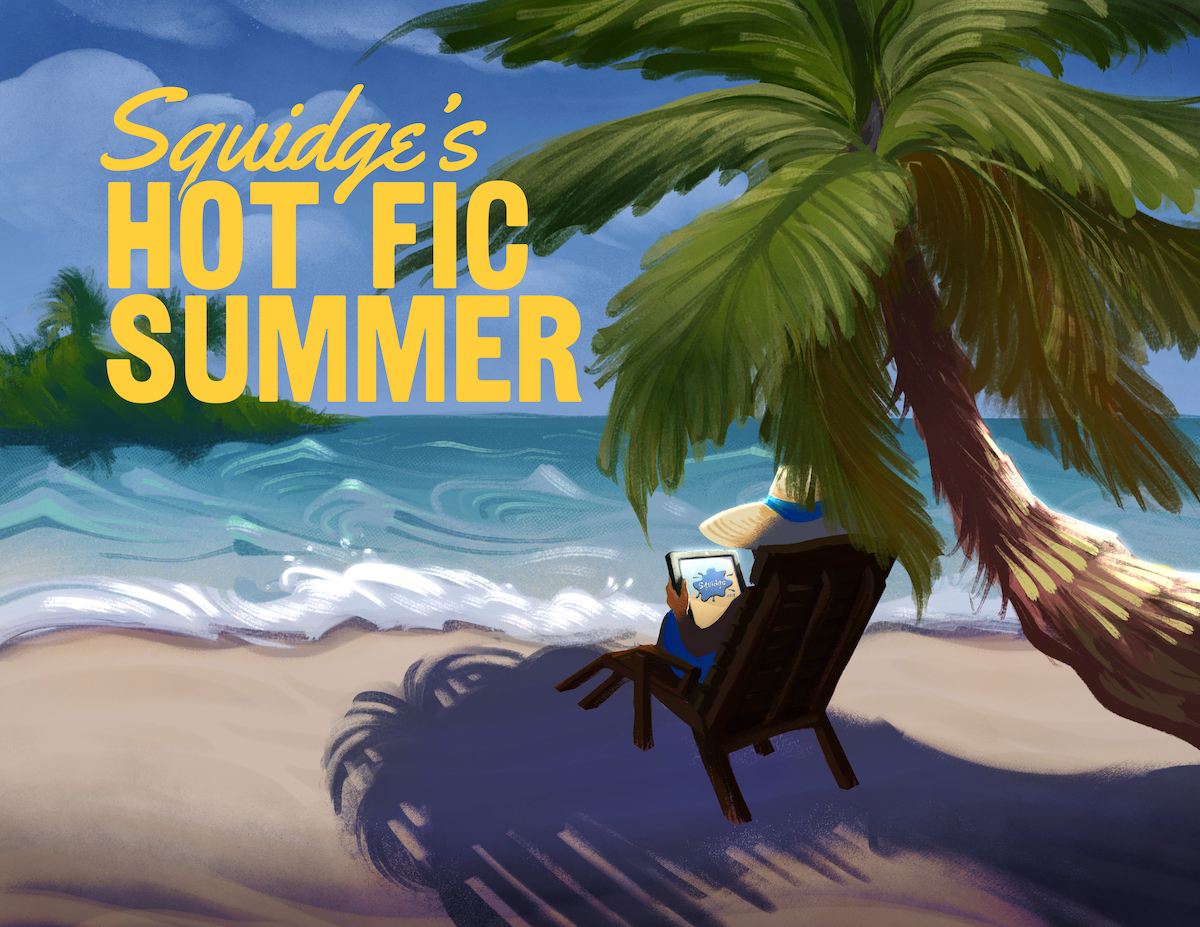
Starting today through the end of Summer here in the Pacific Northwest, we're kicking off our Hot Fic Summer push by letting people know what's going on. Like previous years, we will have gifts for those that want them. And like previous years, if you donate a minimum of $10, you will get a sticker with our Hot Fic Summer design. And if you donate a minimum of $100, you can get a t-shirt and sticker! Plus, you do an amazing thing by donating to keep the lights on here at Squidge.org.
We have a lot planned over the next year, and we can't do it without you, our loyal users. So no matter if you're part of a mailing list, chat with us on Discord, have a website here, post your fics on SquidgeWorld Archive, host your images on Squidge Image Hosting, or just hang out where the muse takes you - you're part of our future.
How to donate? We use PayPal for everything, so you can simply send money to donations@squidge.org or maybe just press the "donate" button below:
Our goal is $2,500. Can we do it this year? Let's see!
Hot Fic Summer! And if you needed to see our fundraising image, here you go:
Starting today through the end of Summer here in the Pacific Northwest, we're kicking off our Hot Fic Summer push by letting people know what's going on. Like previous years, we will have gifts for those that want them. And like previous years, if you donate a minimum of $10, you will get a sticker with our Hot Fic Summer design. And if you donate a minimum of $100, you can get a t-shirt and sticker! Plus, you do an amazing thing by donating to keep the lights on here at Squidge.org.
We have a lot planned over the next year, and we can't do it without you, our loyal users. So no matter if you're part of a mailing list, chat with us on Discord, have a website here, post your fics on SquidgeWorld Archive, host your images on Squidge Image Hosting, or just hang out where the muse takes you - you're part of our future.
How to donate? We use PayPal for everything, so you can simply send money to donations@squidge.org or maybe just press the "donate" button below:
Our goal is $2,500. Can we do it this year? Let's see!

Friday, June 5 - Make a Wish
Jun. 5th, 2026 09:10 pmprisca posting in icon_promptlyHello everybody,
it's Friday and time for our next Make a Wish day. Today is your chance to ask for icon(s) you've dreamed about for quite a while already.
Prompting:
- You may leave up to three wishes!
- One wish per comment.
- Everything goes: fandoms, characters, real persons, stock photos
- Add some extra wishes like colors, frames, background, or text. Leave your name if you want to get it added to your icon.
Filling a wish:
- One to three icons per prompt.
- Follow the wishes.
- You may fill a wish that is already filled.
You don't have any wishes at the moment? Remember, you can leave prompts in older threads at any time. Or maybe you want to fill a lonely prompt? Check previous posts or the prompt overview list.
Have fun, and don't forget to be nice. NEVER change a gifted icon, or pass it off as your own. Thank you!
it's Friday and time for our next Make a Wish day. Today is your chance to ask for icon(s) you've dreamed about for quite a while already.
Prompting:
- You may leave up to three wishes!
- One wish per comment.
- Everything goes: fandoms, characters, real persons, stock photos
- Add some extra wishes like colors, frames, background, or text. Leave your name if you want to get it added to your icon.
Filling a wish:
- One to three icons per prompt.
- Follow the wishes.
- You may fill a wish that is already filled.
You don't have any wishes at the moment? Remember, you can leave prompts in older threads at any time. Or maybe you want to fill a lonely prompt? Check previous posts or the prompt overview list.
Have fun, and don't forget to be nice. NEVER change a gifted icon, or pass it off as your own. Thank you!
Anthony Stewart Head
Jun. 5th, 2026 07:59 pmil_mio_capitano posting in summer_of_gilesIt’s been coming for a short while but my heart is broken at today’s sad news.
Rest in Peace you beautiful and kind man.
Rest in Peace you beautiful and kind man.
US Politics: Pete Hegseth wants the US military to shrink
Jun. 5th, 2026 02:30 pmpetraHe's been taking women and men of color off the promotion list.
Fuck that guy.
He's kicked out trans people.
Fuck that guy.
He's been limiting the number of faiths the US military chaplain service will support.
Fuck that guy.
On the other hand, I am all for the US military shrinking down to the size where, like Grover Norquist's ambition for the government, I can drown it in the bathtub, so -- the enemy of my enemy is my ally? Mmmmmaybe?
Okay, so, you go, Pete Hegseth. Alienate everyone! Only straight cis Christian men should die for our country! Throw everyone else out! And then we can -- just maybe -- reduce the budget by an order of magnitude or five.
It Makes a Fellow Proud to be a Soldier is today's Tom Lehrer earworm.
Fuck that guy.
He's kicked out trans people.
Fuck that guy.
He's been limiting the number of faiths the US military chaplain service will support.
Fuck that guy.
On the other hand, I am all for the US military shrinking down to the size where, like Grover Norquist's ambition for the government, I can drown it in the bathtub, so -- the enemy of my enemy is my ally? Mmmmmaybe?
Okay, so, you go, Pete Hegseth. Alienate everyone! Only straight cis Christian men should die for our country! Throw everyone else out! And then we can -- just maybe -- reduce the budget by an order of magnitude or five.
It Makes a Fellow Proud to be a Soldier is today's Tom Lehrer earworm.
AD/Podcast Favorites: Facts facts facts
Jun. 5th, 2026 09:14 pmshipperslist posting in voiceinmyear(Repost from my journal from 2019)
The alternative title was "Why bother with horror audiodrama when reality is terrible?"
In general, I enjoy fiction over fact but there are some podcasts out there that I love. If nothing else, they underline with a heavy hand how twisted humans can be. Quoting Dean Winchester, "Monsters I get. People are just crazy."
***
No matter where you search for podcasts, Dan Carlin's Hardcore History is always at the top of the list. It's not so much a history podcast but more like five hours long philosophical lectures on the human nature and how far we're ready to go to gain...what, exactly? Power?
The Dream is a twelve-episode show that dismantles multi-level-marketing firms and exposes them of what they are: pyramid scams targeting people who are already vulnerable. If a thing sounds too good to be true, it really isn't.
American Hysteria made me laugh and gape. It's a scripted podcast exploring moral panics, urban legends, and conspiracy theories. I binged through it in a couple of days and enjoyed every minute of it––if enjoying is the right word to describe it. It seems that the majority of the hysteric episodes in America have something to do with women and sexual and ethnic minorities. Or more accurately, they have everything to do with the white, Christian patriarchy losing power and being forced to see they're not the peak of human evolution. The fear of the unknown is a powerful motivation behind horrible, horrible acts.
Caliphate follows a NY Times journalist Rukmini Callimachi on her journey to understand what ISIS is, how it recruits, and how it works. A chilling and highly interesting podcast!
The Feast isn't horror. It's a food show of historical dishes. Ranging from the ancient Mesopotamia to prohibition era America, Laura Carlson explores "meals that make history," and even prepare historical dishes. It's funny, interesting, and really enjoyable to listen to.
Showcase from Radiotopia offers original podcast series. I recommend The Polybius Conspiracy and Ways of Hearing.
ETA:
Maintenance Phase
Wellness & weight loss, debunked & decoded. Michael Hobbs and Aubrey Gordon are hilarious and excellent together and the episodes are an absolute joy to listen to. MP after dark is the Patreon exclusive and just as hilarious.
Other good fact podcasts for your enjoyment: Lore, Tides of History, Dear Sugars, Auta Antti (only in Finnish), The History of Witchcraft, Lore, Mafia, Mythos Podcast, and of course, Serial.
Previous favorites:
AD Favorites: Investigative fiction
AD Favorites: Immersive fiction
The alternative title was "Why bother with horror audiodrama when reality is terrible?"
In general, I enjoy fiction over fact but there are some podcasts out there that I love. If nothing else, they underline with a heavy hand how twisted humans can be. Quoting Dean Winchester, "Monsters I get. People are just crazy."
***
No matter where you search for podcasts, Dan Carlin's Hardcore History is always at the top of the list. It's not so much a history podcast but more like five hours long philosophical lectures on the human nature and how far we're ready to go to gain...what, exactly? Power?
The Dream is a twelve-episode show that dismantles multi-level-marketing firms and exposes them of what they are: pyramid scams targeting people who are already vulnerable. If a thing sounds too good to be true, it really isn't.
American Hysteria made me laugh and gape. It's a scripted podcast exploring moral panics, urban legends, and conspiracy theories. I binged through it in a couple of days and enjoyed every minute of it––if enjoying is the right word to describe it. It seems that the majority of the hysteric episodes in America have something to do with women and sexual and ethnic minorities. Or more accurately, they have everything to do with the white, Christian patriarchy losing power and being forced to see they're not the peak of human evolution. The fear of the unknown is a powerful motivation behind horrible, horrible acts.
Caliphate follows a NY Times journalist Rukmini Callimachi on her journey to understand what ISIS is, how it recruits, and how it works. A chilling and highly interesting podcast!
The Feast isn't horror. It's a food show of historical dishes. Ranging from the ancient Mesopotamia to prohibition era America, Laura Carlson explores "meals that make history," and even prepare historical dishes. It's funny, interesting, and really enjoyable to listen to.
Showcase from Radiotopia offers original podcast series. I recommend The Polybius Conspiracy and Ways of Hearing.
ETA:
Maintenance Phase
Wellness & weight loss, debunked & decoded. Michael Hobbs and Aubrey Gordon are hilarious and excellent together and the episodes are an absolute joy to listen to. MP after dark is the Patreon exclusive and just as hilarious.
Other good fact podcasts for your enjoyment: Lore, Tides of History, Dear Sugars, Auta Antti (only in Finnish), The History of Witchcraft, Lore, Mafia, Mythos Podcast, and of course, Serial.
Previous favorites:
AD Favorites: Investigative fiction
AD Favorites: Immersive fiction
Check-In Post - June 5th 2026
Jun. 5th, 2026 07:20 pmbadly_knitted posting in get_knittedHello to all members, passers-by, curious onlookers, and shy lurkers, and welcome to our regular daily check-in post. Just leave a comment below to let us know how your current projects are progressing, or even if they're not.
Checking in is NOT compulsory, check in as often or as seldom as you want, this community isn't about pressure it's about encouragement, motivation, and support. Crafting is meant to be fun, and what's more fun than sharing achievements and seeing the wonderful things everyone else is creating?
There may also occasionally be questions, but again you don't have to answer them, they're just a way of getting to know each other a bit better.
This Week's Question: What kinds of organizers do you like to hold your arts and crafts supplies?
If anyone has any questions of their own about the community, or suggestions for tags, questions to be asked on the check-in posts, or if anyone is interested in playing check-in host for a week here on the community, which would entail putting up the daily check-in posts and responding to comments, go to the Questions & Suggestions post and leave a comment.
I now declare this Check-In OPEN!

wednesday reads on friday
Jun. 5th, 2026 12:06 pmisisFirst I will say that The Unicorn Hunters by Katherine Arden is out now, for those of you intrigued by slightly-supernatural-alternate-history Anne of Brittany. (I reviewed it here from a NetGalley ARC)
Second, hply sjot has it really been a month and a half since I've posted here? Well, I've been traveling a lot. But being on a lot of airplanes means I've also read a lot. (And I probably should have taken notes, because I'm squinting at these book titles and trying to remember what they're about...) I swear I started this post on Wednesday, but...it's taken a while to finish!
The Raven Scholar by Antonia Hodgson ( Sort of an AU Triwizard Tournament in a Hogwarts with many more Houses )
Timeline by Michael Crichton ( Time traveling archaeologists, right up my alley )
A Voice Like Mine by Deb Haaland ( Political memoir of former Secretary of the Interior, current candidate for governor of New Mexico )
The Midnight Library by Matt Haig ( Sliding Doors trope, entertaining but predictable )
The Beheading Game by Rebecca Lehmann ( Basically 16th Century RPF fanfiction in which Anne Boleyn wakes up the day after her execution )
Infinity Gate by M. R. Carey ( Space opera except with multiple AU Earths instead of multiple planets )
A Marriage at Sea by Sophie Elmhirst ( An odd sort of biography about two unpleasant people getting shipwrecked, I guess )
The Poppy War by R. F. Kuang ( Entertaining YA-ish slum kid goes to military school that turns to grimdark Sino-Japanese War Fantasy AU )
The Girl With All The Gifts by M. R. Carey ( I was not expecting zombie apocalypse )
Platform Decay by Martha Wells ( Yay more Murderbot! )
Second, hply sjot has it really been a month and a half since I've posted here? Well, I've been traveling a lot. But being on a lot of airplanes means I've also read a lot. (And I probably should have taken notes, because I'm squinting at these book titles and trying to remember what they're about...) I swear I started this post on Wednesday, but...it's taken a while to finish!
The Raven Scholar by Antonia Hodgson ( Sort of an AU Triwizard Tournament in a Hogwarts with many more Houses )
Timeline by Michael Crichton ( Time traveling archaeologists, right up my alley )
A Voice Like Mine by Deb Haaland ( Political memoir of former Secretary of the Interior, current candidate for governor of New Mexico )
The Midnight Library by Matt Haig ( Sliding Doors trope, entertaining but predictable )
The Beheading Game by Rebecca Lehmann ( Basically 16th Century RPF fanfiction in which Anne Boleyn wakes up the day after her execution )
Infinity Gate by M. R. Carey ( Space opera except with multiple AU Earths instead of multiple planets )
A Marriage at Sea by Sophie Elmhirst ( An odd sort of biography about two unpleasant people getting shipwrecked, I guess )
The Poppy War by R. F. Kuang ( Entertaining YA-ish slum kid goes to military school that turns to grimdark Sino-Japanese War Fantasy AU )
The Girl With All The Gifts by M. R. Carey ( I was not expecting zombie apocalypse )
Platform Decay by Martha Wells ( Yay more Murderbot! )
Vast spaces: cdramas set in the desert
Jun. 5th, 2026 06:58 pmdreamy_dragon73 posting in c_entI'm fascinated by deserts in stories and visual media, so I'm always intrigued when a cdrama or a significant part of it is set in a desert.
Do you like the desert as a drama setting? Have you watched any period or contemporary dramas that were wholly or in part set in a desert? What did you like about them?
Do you like the desert as a drama setting? Have you watched any period or contemporary dramas that were wholly or in part set in a desert? What did you like about them?
RIP Anthony Head
Jun. 5th, 2026 12:40 pmsettiaiIt looks like Anthony Head passed away due to complications from pneumonia.
I've got to admit, this one hurts.
I've got to admit, this one hurts.

Arlathan eXchange
Jun. 5th, 2026 12:38 pmsettiaiI previously made a post about the gifts that I received for the Arlathan eXchange, a Dragon Age exchange that focuses on elves. Since golive on Sunday, though, I've received another gift!
some pain relief, a Fenris/Solas fic. 1,133 words.
Teen And Up Audiences for the rating.
some pain relief, a Fenris/Solas fic. 1,133 words.
Teen And Up Audiences for the rating.

Weekly Reading
Jun. 5th, 2026 09:37 amtorachanRecently Finished
The Maid's Secret and The Inventor
Next two in the Penny Green mystery series. Enjoying these a lot.
Scarlet Morning
Middle grade novel by ND Stevenson of Nimona and She-Ra fame. I had assumed this was going to be a graphic novel, but it is prose with a lot of illustrations (by the author himself, of course). I really loved it. It has that typical Stevenson whimsy and some really interesting world-building. I'm looking forward to the next book.
White Is for Witching
Ugh. I hated this. I have read several other books by Oyeyemi and they ranged from liked it a lot to okay I guess but not really for me. The Icarus Girl is the only one I really liked. This was all over the place in every possible way. Characters feature heavily in the story then randomly disappear, multiple POVs all with the exact same voice and no way to tell them apart until the names of other characters are mentioned so you know it's not that one, and a wandering plot that never really comes together. And it's not a long book, but it felt never-ending. If I were the sort to drop a book midway, I would have done so, but I powered through because I find it difficult to give up once started. I think at this point I'm just going to acknolwedge that she's not my style and avoid reading more by her, even if the plot sounds interesting.
My Time Machine
Graphic novel about a woman whose ancestor was the guy from HG Well's The Time Machine, and her ex-husband builds a time machine according to the guy's plans and then she follows the dates in his account to see if she encounters the same things. It was pretty depressing in a lot of ways (she leaves right as the pandemic is about to start, and covid and Trump and other current events feature heavily in the near future stops she makes), but not without hope. Also how often do you have a middle aged woman as a time traveller?
Nodame Cantabile vol. 9-10
The Maid's Secret and The Inventor
Next two in the Penny Green mystery series. Enjoying these a lot.
Scarlet Morning
Middle grade novel by ND Stevenson of Nimona and She-Ra fame. I had assumed this was going to be a graphic novel, but it is prose with a lot of illustrations (by the author himself, of course). I really loved it. It has that typical Stevenson whimsy and some really interesting world-building. I'm looking forward to the next book.
White Is for Witching
Ugh. I hated this. I have read several other books by Oyeyemi and they ranged from liked it a lot to okay I guess but not really for me. The Icarus Girl is the only one I really liked. This was all over the place in every possible way. Characters feature heavily in the story then randomly disappear, multiple POVs all with the exact same voice and no way to tell them apart until the names of other characters are mentioned so you know it's not that one, and a wandering plot that never really comes together. And it's not a long book, but it felt never-ending. If I were the sort to drop a book midway, I would have done so, but I powered through because I find it difficult to give up once started. I think at this point I'm just going to acknolwedge that she's not my style and avoid reading more by her, even if the plot sounds interesting.
My Time Machine
Graphic novel about a woman whose ancestor was the guy from HG Well's The Time Machine, and her ex-husband builds a time machine according to the guy's plans and then she follows the dates in his account to see if she encounters the same things. It was pretty depressing in a lot of ways (she leaves right as the pandemic is about to start, and covid and Trump and other current events feature heavily in the near future stops she makes), but not without hope. Also how often do you have a middle aged woman as a time traveller?
Nodame Cantabile vol. 9-10
The Friday Five - books
Jun. 5th, 2026 11:55 ammelaganquestions from The Friday Five
1. Do you enjoy reading?
Great big YES on this one
2. What is the first book you remember reading?
I remember reading from The Book of Knowledge. I was fascinated by the stories based on myths and legends, and learned how to use the index pretty damn fast so I could pick out the sections I wanted to read. I was fairly young, and a lot of the words were over my head, but those stories kept me entertained for hours.
3. Who is your favourite author?
Unfair question. It shifts according to my reading appetite. I wish I could say That One! That's my favorite! But that's impossible.
4. What is your favourite book?
Another impossible-to-answer question. I have many many favorites. All well-loved. Picking just one is painful.
5. What is the last book you read and the first you'll read next?
I just finished Ode to the Half-Broken by Suzanne Palmer. As for next on my reading list, the world is wide open.

1. Do you enjoy reading?
Great big YES on this one
2. What is the first book you remember reading?
I remember reading from The Book of Knowledge. I was fascinated by the stories based on myths and legends, and learned how to use the index pretty damn fast so I could pick out the sections I wanted to read. I was fairly young, and a lot of the words were over my head, but those stories kept me entertained for hours.
3. Who is your favourite author?
Unfair question. It shifts according to my reading appetite. I wish I could say That One! That's my favorite! But that's impossible.
4. What is your favourite book?
Another impossible-to-answer question. I have many many favorites. All well-loved. Picking just one is painful.
5. What is the last book you read and the first you'll read next?
I just finished Ode to the Half-Broken by Suzanne Palmer. As for next on my reading list, the world is wide open.
Anthony Head has passsed away
Jun. 5th, 2026 05:14 pmelisiBBC: Buffy and Ted Lasso star Anthony Head dies at 72
Thank you sir for your talent and the joy you brought to so many. And for being a trans ally when so many aren't.
ETA: A heartwarming story about Buffy’s Anthony Stewart Head going out of his way for a young trans fan
Thank you sir for your talent and the joy you brought to so many. And for being a trans ally when so many aren't.
ETA: A heartwarming story about Buffy’s Anthony Stewart Head going out of his way for a young trans fan

AI is not coming for my job
Jun. 5th, 2026 09:05 amelfA friend asked me if I worked in an office (yes) and warned me that AI is probably coming from my job.
I told him no, I am very not worried:
1) I have a union, and
2) My company works with a lot of confidential personal info that needs careful handling, and
3) AI cannot do my job.
AI cannot even attempt to do my job.
I do document formatting & processing, and while I'm sure there are AI advocates who think they can have AI do that, it's because they've never done those.
( Read more... )
I told him no, I am very not worried:
1) I have a union, and
2) My company works with a lot of confidential personal info that needs careful handling, and
3) AI cannot do my job.
AI cannot even attempt to do my job.
I do document formatting & processing, and while I'm sure there are AI advocates who think they can have AI do that, it's because they've never done those.
( Read more... )
Dept. of Music Memes
Jun. 5th, 2026 09:54 amkaffy_rMusic Meme, Day 30
A song that you want to share:
Now we come to the end of this meme - I find myself a little that this exercise is over, but all things come to an end. I've shared 29 days' worth of music with all of you and, in the process, I've had a chance to share music that was new to me as well. It also offered me the chance to re-listen to music I'd already discovered and liked or loved. It was a true joy to do this.
Some songs were beautiful or memorable all on their own. Others, in this age of the art of the music video ... well, their beauty or impact was enhanced by the imagery that framed them. No matter which, I will undoubtedly return again and again to the music I've posted, thanks to this meme.
Over the last few days, I've wondered what song I could present that I was, perhaps, one that unexpectedly affected me, in fact left me enraptured. And a couple of days ago, the choice became easy.
If you've heard of Tuvan throat singing, you may also know some modern musicians in Siberia, Mongolia and other far eastern regions of what was once the USSR. One of these is The HU, described by Wikipedia as a folk metal band from Ulaanbaatar, Mongolia. I find that they beautifully meld the traditions of their forebears with the music they make themselves. Here's an explanation of throat singing by folks who practice it.
The singer featured in this song is LP, whose voice provides a glorious kind of descant in this song and, in my not so humble opinion, is exactly the right person to work with The HU. Here's a link to a song LP wrote and performed, and this version of it left me breathless.
Putting all these musicians together, in a music video that features gorgeous scenes of this world entranced me when I first heard it. You may be affected by it the same way. So here is the HU singing Mother Nature, featuring LP
Thanks to all of you who followed me on this particular aural journey. I had a wonderful time, and I hope you did too (at least occasionally, if nothing else.)
Here's a link to my last music meme post, so you can travel back in time, should you desire to hear or rehear the music I posted.
A song that you want to share:
Now we come to the end of this meme - I find myself a little that this exercise is over, but all things come to an end. I've shared 29 days' worth of music with all of you and, in the process, I've had a chance to share music that was new to me as well. It also offered me the chance to re-listen to music I'd already discovered and liked or loved. It was a true joy to do this.
Some songs were beautiful or memorable all on their own. Others, in this age of the art of the music video ... well, their beauty or impact was enhanced by the imagery that framed them. No matter which, I will undoubtedly return again and again to the music I've posted, thanks to this meme.
Over the last few days, I've wondered what song I could present that I was, perhaps, one that unexpectedly affected me, in fact left me enraptured. And a couple of days ago, the choice became easy.
If you've heard of Tuvan throat singing, you may also know some modern musicians in Siberia, Mongolia and other far eastern regions of what was once the USSR. One of these is The HU, described by Wikipedia as a folk metal band from Ulaanbaatar, Mongolia. I find that they beautifully meld the traditions of their forebears with the music they make themselves. Here's an explanation of throat singing by folks who practice it.
The singer featured in this song is LP, whose voice provides a glorious kind of descant in this song and, in my not so humble opinion, is exactly the right person to work with The HU. Here's a link to a song LP wrote and performed, and this version of it left me breathless.
Putting all these musicians together, in a music video that features gorgeous scenes of this world entranced me when I first heard it. You may be affected by it the same way. So here is the HU singing Mother Nature, featuring LP
Thanks to all of you who followed me on this particular aural journey. I had a wonderful time, and I hope you did too (at least occasionally, if nothing else.)
Here's a link to my last music meme post, so you can travel back in time, should you desire to hear or rehear the music I posted.
